

Article: Espresso vs filter coffee beans: how to choose the right coffee in India
Espresso vs filter coffee beans: how to choose the right coffee in India
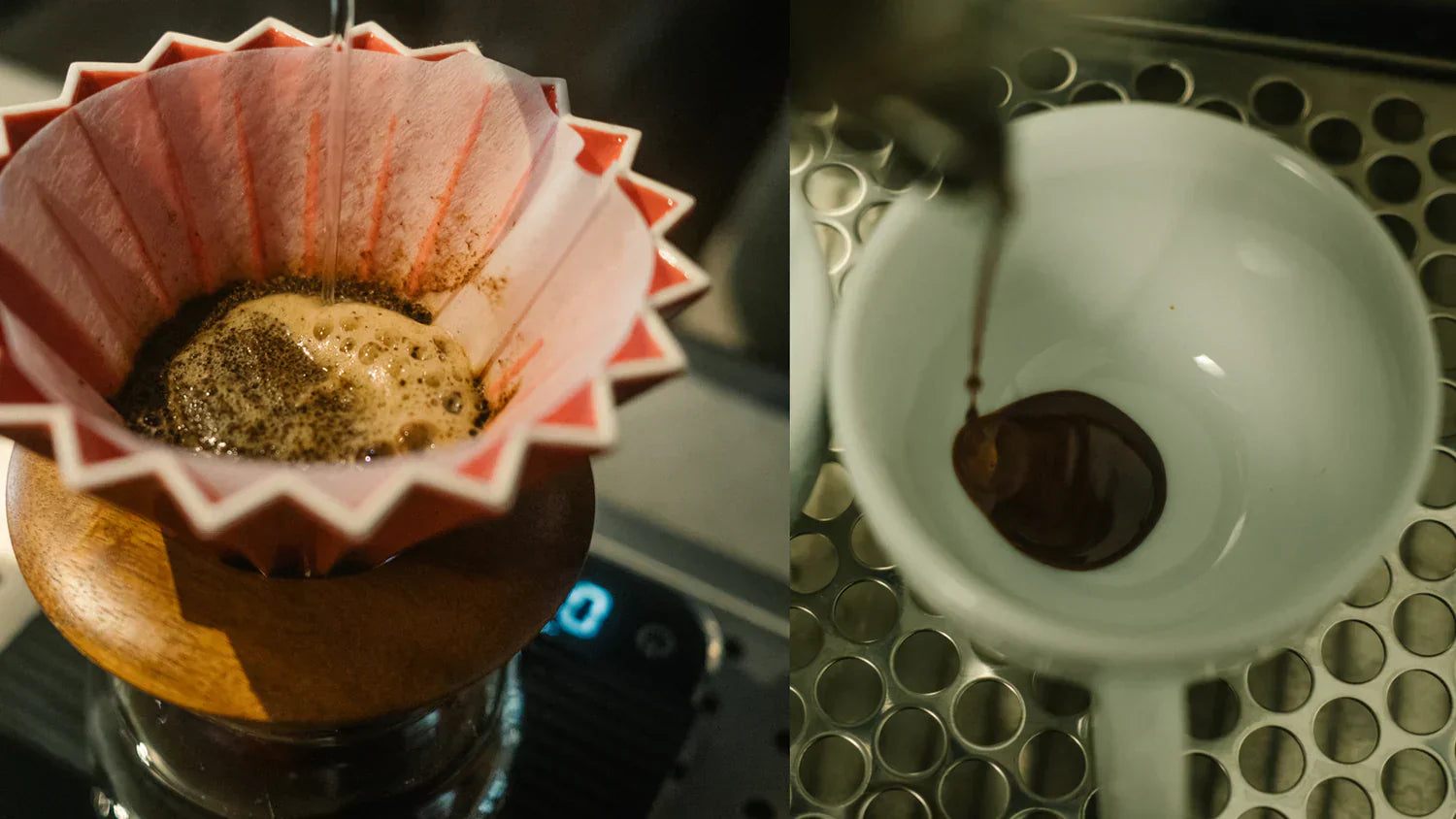
If you’re deciding between espresso and filter coffee beans, start with a simple question: what do you drink most often?
If your daily coffee is a cappuccino or latte, you need a coffee that stays present in milk.
If you prefer black coffee, you need something that shows clarity and flavour without becoming harsh.
If you move between both, you need a coffee that can handle compromise.
Most people try to solve this by looking only at roast level. That helps, but it doesn’t answer the full question. What matters more is how the coffee behaves in your brewing method.
What actually changes between espresso and filter coffee?
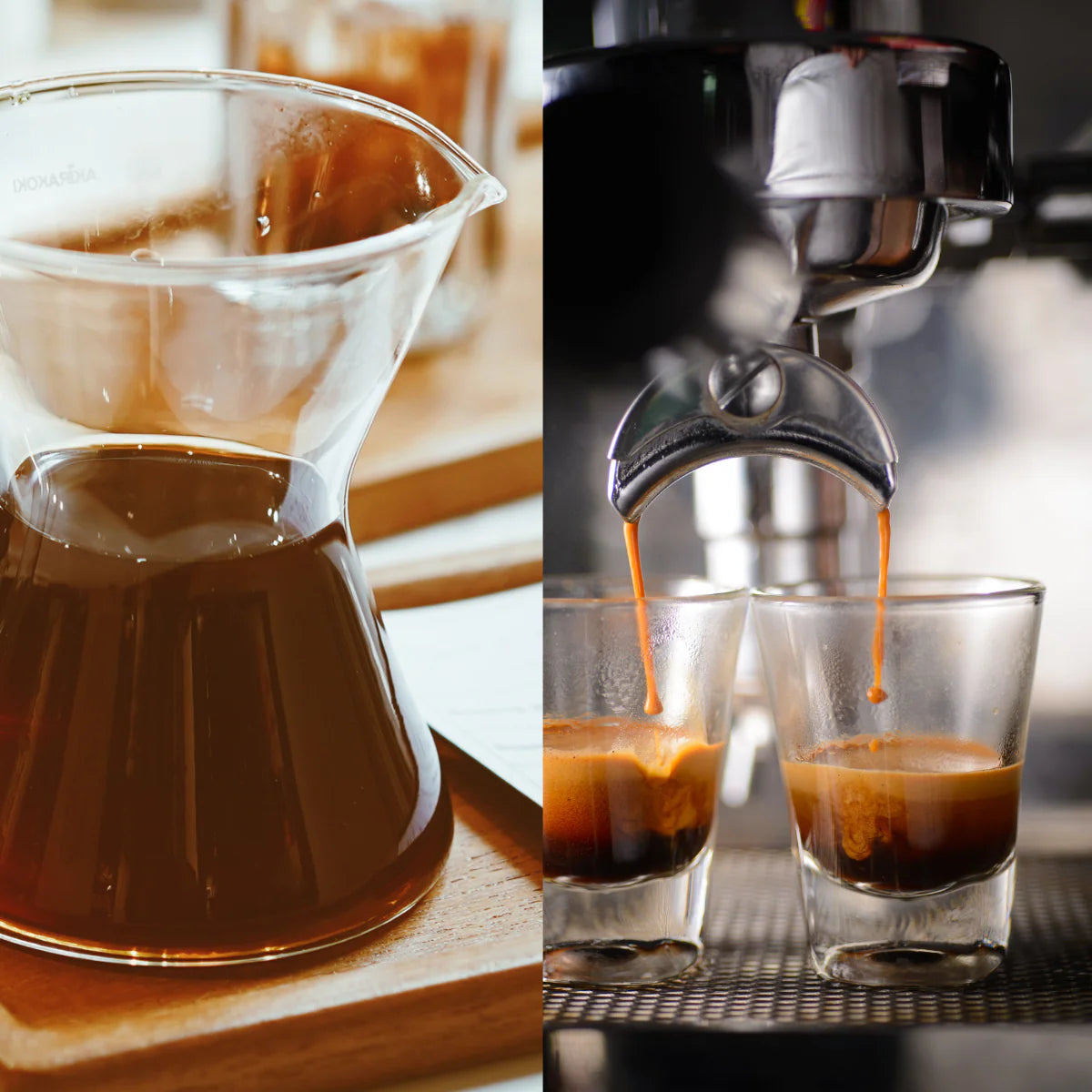
There isn’t a separate category of “espresso beans” and “filter beans.” The difference comes from how the coffee is roasted and how it extracts.
Espresso is a fast, high-pressure brew. Water passes through the coffee in about 25 to 35 seconds. This pulls out body, sweetness, and intensity, but it also means small changes in grind or dose can affect the result immediately.
Filter brewing works very differently. Water moves through the coffee more slowly, either by gravity or immersion. This gives the coffee time to open up, so you notice acidity, aroma, and more detailed flavours.
Because of this:
- A coffee that feels bright and expressive as a pourover can taste sharp or thin as espresso
- A coffee that feels balanced as espresso can taste heavy or muted in filter
This is usually where people start to feel confused. The same coffee behaves differently depending on how you brew it.
What works well for espresso in real use
When you’re making espresso regularly, especially for milk drinks, consistency becomes the priority.
Coffees that are slightly more developed tend to be easier to work with. They extract more predictably and are less sensitive to small errors in grind or timing.
In practical terms, this usually means:
- medium to medium-dark roast
- lower, more controlled acidity
- flavour notes that lean towards chocolate, nuts, or caramel
If you’ve ever tried a very light, fruity coffee in milk, you’ve probably noticed how quickly it disappears. The drink looks right, but the flavour feels weak or undefined.
This is why blends like Yamuna Gold or profiles similar to Aranya tend to work well for espresso. They’re built to stay balanced under pressure and still come through once milk is added.
It’s not that lighter coffees are wrong for espresso. They just require tighter control and a willingness to accept more variation.
What works well for filter coffee
Filter brewing gives you more space to explore flavour.
With more contact time between water and coffee, lighter roasts begin to show their character. You start noticing things like citrus, florals, or subtle sweetness that wouldn’t come through clearly in espresso.
If you enjoy black coffee, this is where most of the range sits.
Coffees like Ethiopia West Arsi or Rwanda Isimbi Fully Washed are good examples. Brewed as filter, they tend to feel clean and layered. The acidity is present, but it feels structured rather than sharp.
If you try to push these coffees into espresso without adjusting your setup, they can feel underdeveloped. Not because they’re bad coffees, but because they’re not built for that style of extraction.
Espresso vs filter coffee beans: side by side
| Factor | Espresso Coffee | Filter Coffee |
|---|---|---|
| Roast level | Medium to medium-dark | Light to medium |
| Acidity | Lower, controlled | More noticeable |
| Flavour profile | Chocolate, nuts, caramel | Fruit, floral, citrus |
| Brewing style | Pressure-based | Gravity or immersion |
| Tolerance to error | Low | Higher |
| Typical use | Milk drinks, shots | Black coffee |
How to read this table
If your setup is not very precise, espresso-friendly coffees tend to be more forgiving in day-to-day use. They give you repeatable results even when conditions vary slightly.
If your goal is flavour detail, filter coffees give you more to work with. You’ll notice more variation between origins and processing styles.
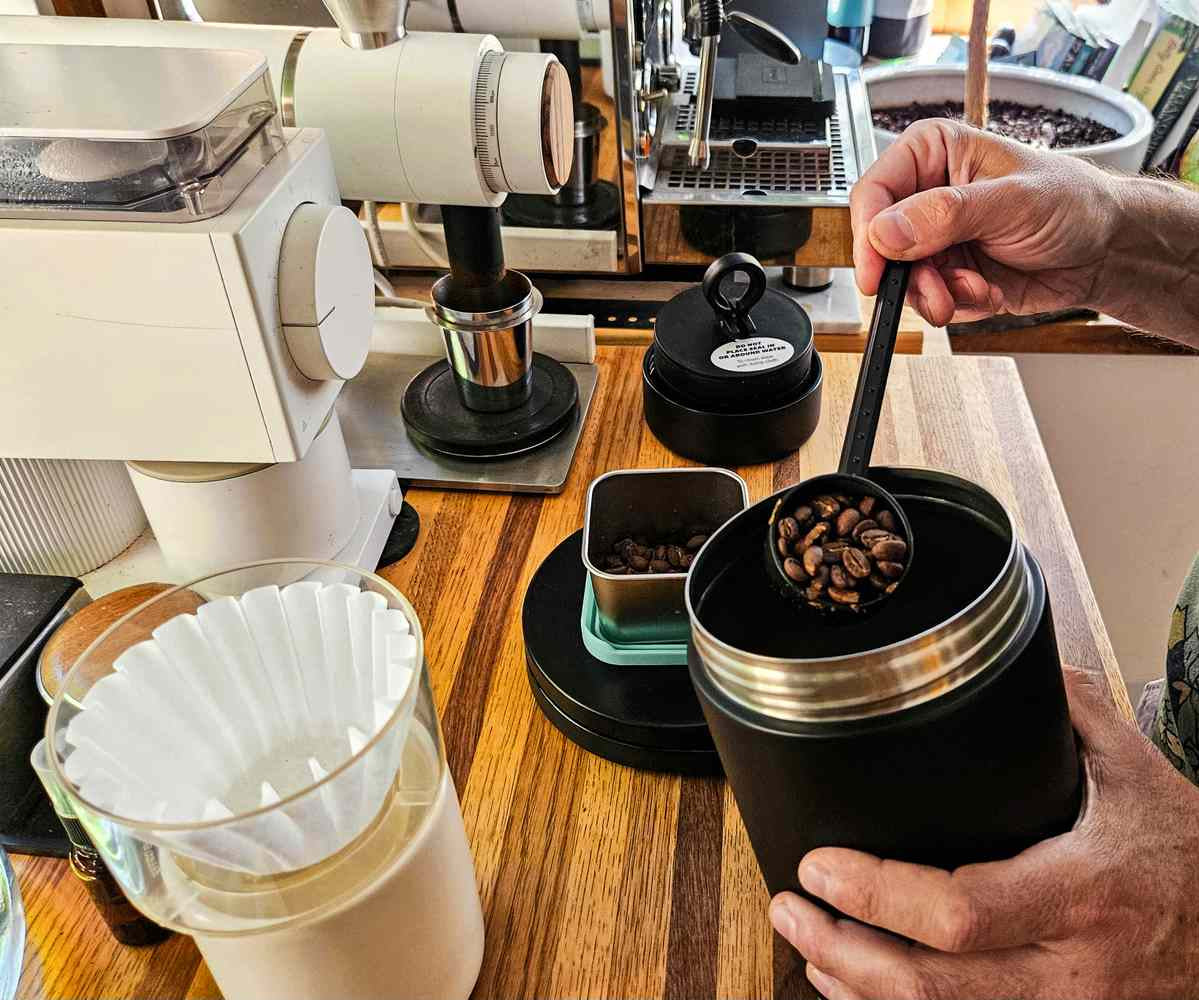
Can one coffee work for both espresso and filter?
It can, but only within a certain range.
Coffees that sit in the middle tend to adapt better. A medium roast with balanced acidity usually behaves reasonably well in both methods.
That said, there are limits.
Very light roasts often struggle in espresso unless everything is dialled in carefully. On the other end, darker roasts can feel flat and overly heavy in filter brewing.
If you’re trying to simplify your setup, a balanced medium roast is a practical place to start. It won’t give you the best possible result in both methods, but it avoids major issues.
How roast level affects what you taste
Roast level changes how easily the coffee extracts and how it presents in the cup.
- Lighter roasts are denser and extract more slowly. They tend to highlight acidity and more delicate flavours.
- Medium roasts sit in a more adaptable range and are easier to work with across different methods.
- Darker roasts extract quickly and lean towards bitterness and heavier body.
A common assumption is that lighter is always better. In reality, it depends on your setup and how much control you have over brewing.
For most people starting out, medium roast is easier to manage and gives more consistent results.
Choosing based on your daily coffee habit
Instead of overthinking roast levels and origin details, it helps to look at what you actually drink.
- If most of your coffee includes milk, you’ll get better results from coffees that are built for espresso. They hold their structure and don’t fade in the cup.
- If you mostly drink black coffee, lighter and more expressive coffees will give you a better experience. This is where origin starts to matter more.
- If you move between both, a balanced coffee is a reasonable compromise. It may not stand out in either direction, but it will stay usable across methods.
How to choose on Videshi Coffee without getting stuck
When you’re browsing, it’s easy to get lost in descriptions. Instead of reading everything, focus on a few signals.
Start with the brewing method the coffee is suited for. That usually tells you how it’s expected to behave.
Then look at the flavour notes. Chocolate and nut-driven profiles are generally easier to work with in espresso. Fruit-forward coffees tend to open up more in filter.
Finally, check the roast level and match it with your setup. A lighter roast needs more control. A medium roast gives you more room to work.
If you’re still unsure, it helps to try two different directions rather than committing to one. For example, pick one espresso-friendly blend and one filter-focused single origin. Brewing both will give you a clearer reference point than reading descriptions alone.
Where most people go wrong
A lot of confusion comes from a few common patterns.
One is choosing based on what’s popular rather than what fits your setup. A coffee that works well for someone else may not behave the same way in your equipment.
Another is underestimating grind quality. Even the right coffee won’t perform well if the grind is inconsistent.
It’s also common to use one type of coffee for everything. While that can work, it often leads to flat results in filter or unstable shots in espresso.
Finally, there’s a tendency to focus only on roast level. Roast matters, but origin and processing play a big role in how the coffee actually tastes.
Need help?
Frequently Asked Questions
You can, but lighter coffees need more precise grinding and extraction control. Without that, they often taste sharp or under-extracted.
Strength depends on how you brew. Espresso is more concentrated, but the beans themselves are not inherently stronger.
Coffees with chocolate and nut profiles tend to hold up better in milk and give a more balanced cup.
Lighter to medium roasts with clean acidity usually show more flavour when brewed as filter.
Filter brewing is easier to manage. Espresso gives more control but requires more precision.